Avengers: Endgame (2018 → 2023)
The survivors are: Rogers, Stark, Thor, Banner, Romanoff, Barton, Rhodey, Nebula, Rocket, Carol Danvers, Okoye, Pepper Potts, M'Baku, Wong, Happy Hogan — and Scott Lang, stranded and unaccounted for.
Twenty-three days after the Snap, Danvers locates Thanos on a remote planet. He has already used the Stones a second time to destroy the Stones, so there is nothing to undo. Thor beheads him with Stormbreaker, on the spot, in about three seconds. It accomplishes nothing, and the guilt of not aiming for the head the first time is what breaks him for five years. The film jumps forward.
The world in 2023 is grief. Rogers runs support groups. Romanoff runs what's left of the Avengers alone. Stark has married Pepper Potts and has a daughter, Morgan, and refuses to help because helping means risking losing her. Thor has retreated into alcoholism and depression in New Asgard. Banner has merged his two selves into "Smart Hulk." Barton, having lost his entire family, has become a mass-murdering vigilante called Ronin.
"Ronin" is not an organisation, it's an identity Clint invents. After the Snap kills Laura and all three of his children in front of him, he abandons the Hawkeye name and spends five years travelling the world murdering criminals who survived and he felt didn't deserve to — yakuza, cartels, mafias. Natasha finds him in Tokyo and brings him back.
The consequences catch up with him in Hawkeye (series), where Maya Lopez hunts him for killing her father.
Thor: Love and Thunder later shows Asgardians travelling via a Bifröst opened by Stormbreaker — so travel is possible, but tied to Thor's axe rather than to a place.
Scott Lang escapes the Quantum Realm — five hours for him, five years for everyone else — and realises time works differently down there. Stark cracks the physics. They mount a time heist: teams travel to past moments to borrow the Stones before Thanos takes them.
None of this is conventional time travel. The Quantum Realm sits outside linear time, so you can enter at one point and exit at another. Stark solves the navigation problem overnight — an inverted Möbius strip — after seeing an old photo of himself and Peter Parker.
They build Quantum GPS suits and Pym Particle vials, and each person gets exactly two particles: one out, one back. That constraint drives the whole second act.
The film's stated rule is that you cannot change your own past. Altering the past creates a branched timeline and leaves your present untouched. Which is precisely why the Stones must be returned afterwards — to prevent branches forming.
Whether the people in the past notice varies case by case, and it is one of the most enjoyable things in the film:
- 2012 Rogers does not know. He thinks he's fighting a Loki illusion. Present-Rogers wins the fight by saying "Bucky is alive," which stuns him
- Howard Stark (1970) does not know. Tony introduces himself as "Howard Potts." Howard finds him oddly familiar and nothing more
- Frigga (2013) does know, instantly. She's a witch; she tells Thor she can see he's from the future and doesn't care
- The Ancient One (2012) knows, because Banner is holding the Time Stone and she can see the branch forming
- 2014 Thanos learns everything, which is the disaster
Key events: Rogers fights his 2012 self; Stark meets his father in 1970 and gets the conversation he never had; Thor speaks to Frigga on the day she dies and gets absolution; Banner obtains the Time Stone from the Ancient One by explaining what's at stake. On Vormir, Natasha Romanoff and Clint Barton fight over which of them will die for the Soul Stone. Natasha wins the argument by losing the fight, and dies.
In 2014, past-Nebula involuntarily accesses present-Nebula's memories and sees the Snap, Thanos's death, and the entire plan. Thanos extracts it from her. Past-Nebula then swaps places with present-Nebula and travels forward as a spy. Present-Nebula eventually kills her.
The returned reappear exactly where they vanished from, in 2023, having experienced no time at all — Banner explicitly wills it that way.
Clint isn't involved in building it; his role in the heist was Vormir, and in the battle he carries the Gauntlet across the field.
A 2014 Thanos follows them forward and attacks. The final battle assembles every surviving character in the franchise.
Tony Stark takes the Stones and snaps Thanos and his entire army out of existence, and it kills him. His funeral closes the Infinity Saga.
There are two different Thanoses here, which is why Thor beheading him in the opening settles nothing. Thor killed the 2018 Thanos permanently at the start of the film. The one in the final battle is the 2014 version, pulled forward by Nebula's neural link — he has never snapped, never held the Stones, and is arguably more dangerous for it.
His army was the Chitauri, Outriders, and Black Order — a fleet, not half a world.
Steve Rogers returns the Stones to their original moments — and then stays in the past, living a full life with Peggy Carter, returning as an old man to hand the shield to Sam Wilson.
Each Stone goes back to the exact instant it was taken, so no branch forms:
- Space (Tesseract) — 1970, Camp Lehigh
- Mind (scepter) — 2012 New York, back into HYDRA custody
- Reality (Aether) — 2013 Asgard, back into Jane Foster
- Power (Orb) — 2014 Morag, back into the temple
- Time — 2012 New York, to the Ancient One
- Soul — Vormir, 2014. The film never shows this. Natasha does not come back, and the mechanics of returning a Stone that cost a life are never addressed
He also returns Mjolnir to 2013 Asgard.
He cannot stay in the past cleanly — that is the honest answer.
Co-writers Markus and McFeely have said the opposite: he was always there, in the main timeline, all along.
Marvel has never reconciled the two accounts.
With Chris Evans confirmed for Doomsday, whichever answer that film picks will probably become canon retroactively. Don't over-invest in explaining it before December.
He leaves them early in Thor: Love and Thunder after a short power struggle with Quill over who's in charge.
Gamora does not come back to life. The one who died on Vormir is permanently dead; the Soul Stone sacrifice is irreversible.
The Gamora who is alive is the 2014 version, pulled forward with 2014 Thanos and stranded in 2023 when he's erased. She has no memory of the Guardians, no relationship with Quill, and finds his grief for a version of her she never was intensely irritating. Guardians Vol. 3 is largely about Quill accepting that.
Spider-Man: Far From Home (2024, eight months later)
Peter, grieving Stark, is handed E.D.I.T.H. — a Stark satellite weapons network — on a European school trip. Quentin Beck / Mysterio presents himself as a hero from another Earth fighting elemental monsters; the monsters are illusions generated by drone projectors, and Beck is a disgruntled ex-Stark employee running a con with a team of them.
Peter exposes him. Beck dies, but with a contingency: a doctored video is released posthumously by J. Jonah Jameson that outs Peter as Spider-Man and frames him for Beck's murder.
WandaVision (late 2023, three weeks after Endgame)
Wanda Maximoff, unable to process Vision's death, unconsciously seizes the New Jersey town of Westview and rewrites it into a sitcom reality where Vision is alive and they have twin sons, Billy and Tommy. Three thousand civilians live inside her grief as puppets, aware and screaming.
Agatha Harkness, a centuries-old witch, has been posing as a neighbour to learn how she does it. The answer: Wanda is the Scarlet Witch, a figure of prophecy in the Darkhold whose power exceeds the Sorcerer Supreme's and is not learned but innate.
The Hex is the hexagonal energy field Wanda unconsciously projects around Westview, rewriting reality inside it into a sitcom.
S.W.O.R.D. — Sentient Weapon Observation and Response Division — is a sister agency to S.H.I.E.L.D. handling extraterrestrial and enhanced threats, founded by Maria Rambeau and now run by Tyler Hayward.
The title isn't earned — it's what she always was. She was born with latent chaos magic; the Mind Stone experiments unlocked it rather than created it. The Darkhold names her as a being of prophecy whose power is innate rather than learned, which is why Agatha — a trained witch of several centuries — cannot match her.
Pietro's superspeed came from the same experiments, but he had no innate magic. (And to head off a common mix-up: Wanda has no sister. Pietro is her twin brother, and he died in Age of Ultron.)
The Darkhold is a book of dark magic written on indestructible pages. It doesn't grant power neutrally — it corrupts the reader, rewriting their judgment while convincing them they're thinking clearly. Wanda goes from grieving to willing to murder a teenager without ever experiencing a moment where it felt like a bad decision. Agatha explicitly warns her. She reads it anyway.
Wanda dismantles the Hex, losing Vision and her children. She takes the Darkhold and goes into isolation to study it. This is a bad decision.
Monica Rambeau — Carol Danvers's goddaughter, now grown, gains energy-manipulation powers passing through the Hex.
S.W.O.R.D. reassembled the original Vision's body from salvage as a weapon. That body is White Vision — colourless, with no memories and no personality — and Hayward deploys him to destroy Wanda's Vision.
The two Visions meet and, instead of fighting, debate the Ship of Theseus problem: if you replace every part of an object, is it still the same object? Wanda's Vision resolves it by transferring his memories directly into White Vision's mind. White Vision processes it, says "I am Vision," and flies away. He has not been seen since — he is the subject of VisionQuest (series, expected late 2026).
The Falcon and the Winter Soldier (2024)
Underneath that is his belief that a Black man cannot be Captain America in this country and be accepted.
The government immediately gives it to John Walker anyway — which is the show's actual argument. The symbol was never his to decline, because it was never treated as his.
Walker takes a serum because he is outmatched — the Flag Smashers are all enhanced and he isn't, and his partner Lemar Hoskins is killed in front of him.
The antagonists are the Flag Smashers, led by Karli Morgenthau — Blip refugees radicalised by the return of borders and the collapse of the emergency aid systems that supported the displaced during the five years.
The show's real subject is what happens to the people the Blip's reversal made inconvenient.
Sam meets Isaiah Bradley, whose story is the show's moral centre. In the 1950s the US government tested serum derivatives on Black soldiers without consent. Bradley was already a super-soldier and fought in Korea. When he went off-book to rescue captured men, he was court-martialled, imprisoned for thirty years, experimented on throughout, and erased from the records. The government told his wife he was dead.
So the sequencing is: Bradley has a serum and no recognition; Walker has recognition and no serum, and takes one out of desperation; and Sam takes no serum at all. He becomes Captain America with wings, a shield, and no enhancement whatsoever, which is precisely the point.
Also introduced here: Joaquín Torres, a young Air Force lieutenant working with Sam. When Sam takes the shield, the Falcon identity is free — and by Brave New World (2025), Torres is flying as the new Falcon.
Sharon Carter is Peggy Carter's great-niece, a S.H.I.E.L.D./CIA agent introduced in The Winter Soldier. She helped Rogers in Civil War by stealing his shield back and was branded a traitor for it. She fled to Madripoor and became the Power Broker — the criminal figure the whole show has been chasing. In the finale she's pardoned and reinstated at the CIA, with full access, which nobody knows to be alarmed about.
Valentina Allegra de Fontaine recruits John Walker as U.S. Agent.
Loki, Seasons 1 and 2
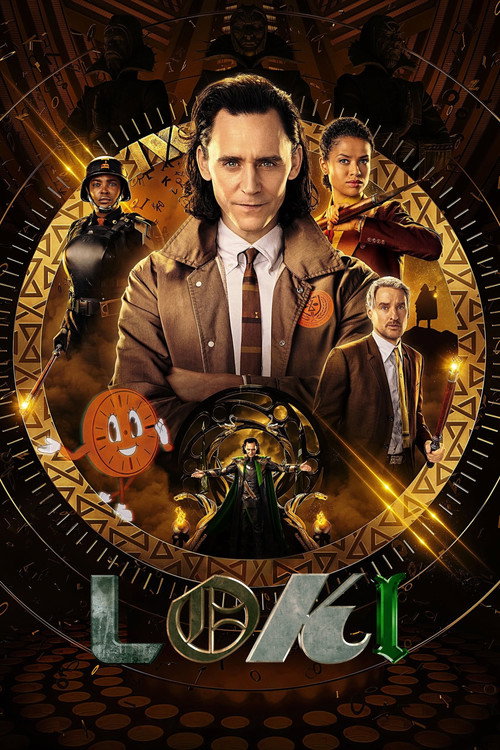
Nobody else from the heist is arrested, because most of them didn't branch anything. The heist was designed to avoid it — take the Stones, return them at the exact moment, no divergence — and it mostly worked. The 2012 New York failure is the single uncorrected error, so the TVA arrested the anomaly.
The show also implies the TVA was told to leave the heist alone; a Mobius line calls it "supposed to happen," which is one of its better jokes about determinism.
Mobius is a variant himself, which is the cruelty of it. He Who Remains abducted people from across the multiverse, wiped their memories, and gave them manufactured lives. Mobius is a variant of some ordinary man from some timeline. In Season 2 he glimpses that other life — a father with two sons — and chooses not to reclaim it. Hunter B-15 and Ravonna Renslayer are in the same position.
The reveal: the TVA's "Time-Keepers" are props. The organisation is run by He Who Remains, a variant of a 31st-century scientist who discovered the multiverse, watched his own variants wage a multiversal war that destroyed nearly everything, and won by isolating a single timeline and pruning all others. Every TVA agent is an abducted, mind-wiped variant.
He offers them a choice: take over from him, or kill him and let the multiverse branch freely — which means his variants, some far worse, return.
Sylvie was taken by the TVA as a child and hunted her whole life, with one goal: destroy the organisation that stole it. Being offered stewardship of that same system is the one thing she cannot accept.
Loki disagrees, and argues they should stop and think, because the alternative is a multiversal war. They fight over it. She kisses him, pushes him through a time door, and kills He Who Remains alone.
On whether they "end up together" — they don't, beyond that moment. The show frames them as two people who understand each other completely and want incompatible things. Season 2 has them working together and still disagreeing. And yes, he was recruited to hunt her and switched sides; that's the arc.
The multiverse opens. This is the inciting incident of the entire Multiverse Saga.
Season 2 — what the Temporal Loom is. The machine at the heart of the TVA that takes raw, chaotic time and weaves it into a single stable Sacred Timeline. It was engineered for one timeline. After Sylvie's kill, branches multiply infinitely; the Loom cannot weave infinite threads and moves toward a detonation that would destroy everything.
After many failed attempts, Loki realises the Loom is the wrong solution entirely — it exists to limit the multiverse rather than sustain it. He destroys it, walks out into the raw timelines, gathers the dying branches in his hands, and holds them together himself — sitting alone on a throne at the end of time, at the centre of a great tree of living timelines.
So yes: he ends as something like the god of the multiverse. The character who spent eleven years demanding a throne gets one, and it is a prison.
Kang appears nowhere before this. Loki Season 1 is his first appearance — and technically not as Kang but as He Who Remains, a variant who explicitly says he is not the conqueror. Kang the Conqueror proper debuts in Quantumania (film). Victor Timely appears in Loki Season 2: a nervous early-20th-century inventor with a stammer who has no idea he's a variant of a multiversal warlord. He is neither good nor evil — the point is that Kang variants aren't all conquerors.
With Kang written out as the saga villain, both Timely and the Council of Kangs are now orphaned threads that lead nowhere.
Shang-Chi and the Legend of the Ten Rings (2024)
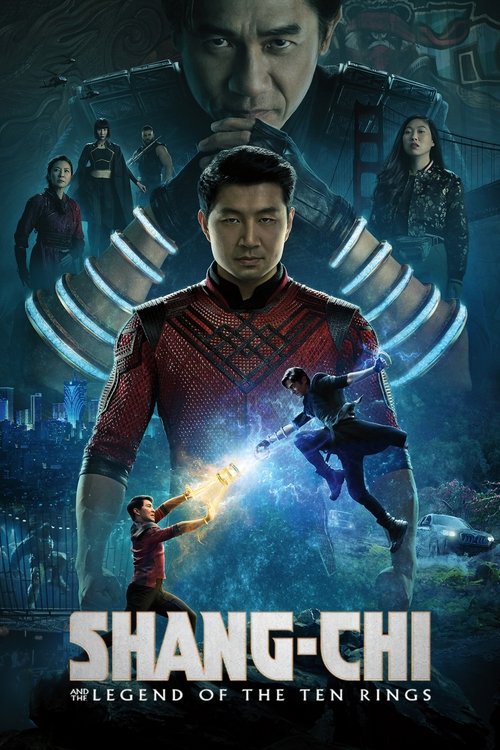
Wenwu trained Shang-Chi from age seven as an assassin. At fourteen he was sent to kill the man who murdered his mother. He did it — and then didn't go home. He fled to San Francisco, took the name Shaun, and spent ten years working as a hotel valet with his friend Katy, telling nobody anything. That's the flight this film opens on.
His father Wenwu drags him and his sister Xialing back, convinced their mother is alive and imprisoned in the hidden realm of Ta Lo. He's being deceived by a soul-eating entity called the Dweller-in-Darkness, which has been mimicking her voice.
How Wenwu dies, and how the rings pass over. He attacks Ta Lo and releases the Dweller. It attacks him and eats his soul while he's mid-fight with his son. In his last moment he passes the ten rings directly to Shang-Chi, who then uses them — plus his mother's Ta Lo techniques and the Great Protector dragon — to kill the Dweller.
Xialing takes over running the Ten Rings organisation itself.
The rings begin transmitting a signal to somewhere unknown.
The mid-credits scene has Wong, Bruce Banner, and Carol Danvers examining them — establishing that Shang-Chi is now on the Avengers' radar.
The signal's destination has never been resolved.
Eternals (2024)
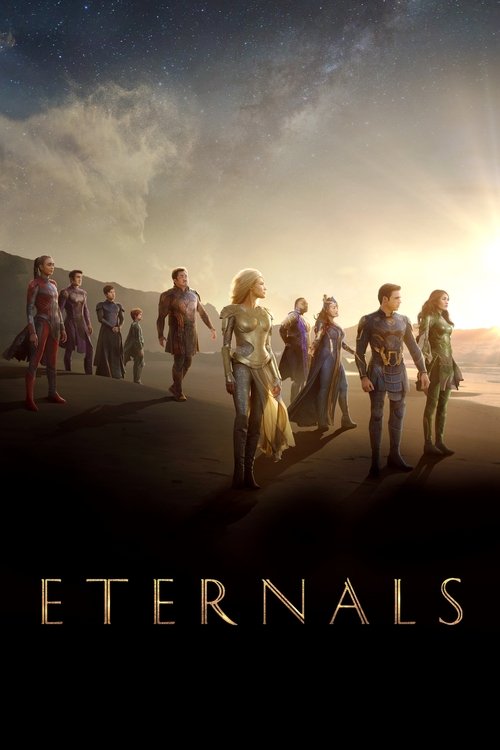
Ikaris kills her because he sides with Arishem. He has known the truth for centuries and believes the Celestials' design is above question: billions of lives across the cosmos depend on new Celestials being born, and one planet is an acceptable price. He kills Ajak for treason by feeding her to Deviants, and Gilgamesh dies in a Deviant fight partly through his interference.
It's suicide, plainly.
He hasn't. That thread is entirely open.
The reason to care: the half-emerged Celestial corpse remains in the Indian Ocean, and it is made of adamantium.
That is the film's real legacy — and it makes Wolverine's metal possible in this universe.
Hawkeye (Christmas 2024)
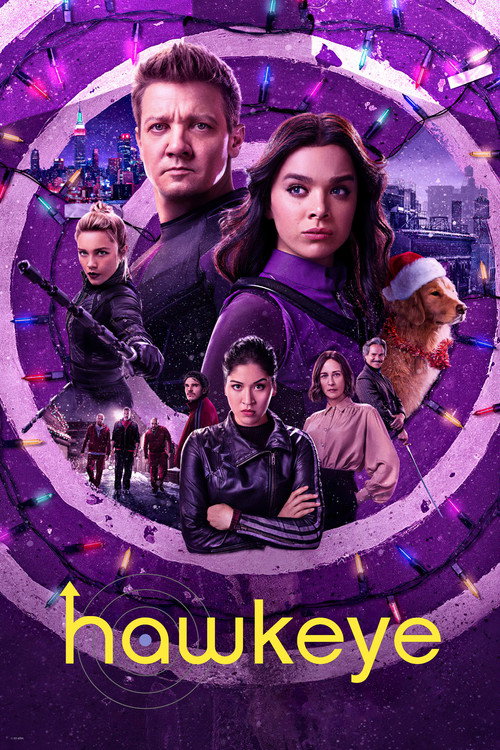
Clint Barton meets Kate Bishop, a young archer who found the Ronin suit. They deal with the fallout of his Blip-era killings, the Tracksuit Mafia, and Maya Lopez / Echo, whose father Ronin killed. Yelena Belova arrives to assassinate Barton, having been told by Valentina that he killed Natasha; Barton tells her the truth, and she lets him go.
The crime boss behind everything is Wilson Fisk / Kingpin — the Netflix Daredevil villain, formally imported into the film universe. Maya shoots him; he survives.
Laura Barton is revealed to be a former S.H.I.E.L.D. agent, Agent 19 — Mockingbird.
Spider-Man: No Way Home (late 2024)
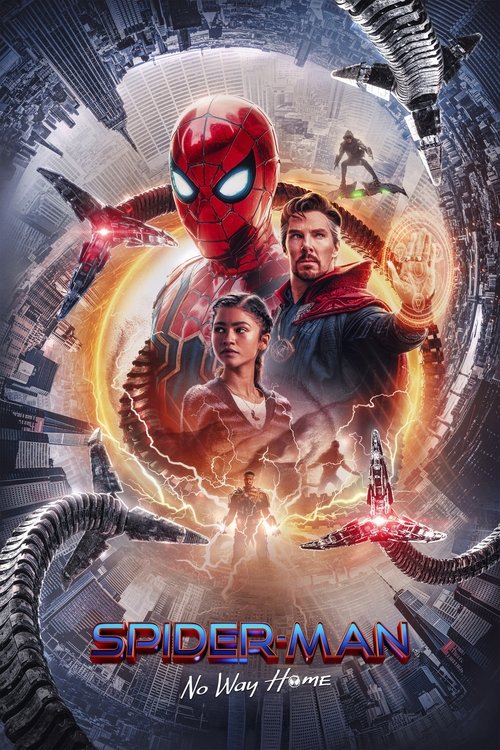
Peter's exposure destroys his life and, by association, MJ's and Ned's — all three are rejected from MIT. He asks Doctor Strange to make the world forget he's Spider-Man.
Mid-cast, Peter starts adding exceptions out loud: not MJ, not Ned, not Aunt May, wait, not Happy. Each amendment destabilises the runes. Strange eventually contains it, but by then the spell has already started reaching into other universes for anyone who knows that Peter Parker is Spider-Man.
That's the precise mechanism, and it answers the obvious question: yes, the villains knew their own Peter's identity, and yes, he was Spider-Man in their universes. Green Goblin, Doc Ock, and Sandman come from Tobey Maguire's universe; Electro and Lizard from Andrew Garfield's. Electro's line about expecting Spider-Man to be Black under the mask lands because he never actually saw his Peter's face.
All five are pulled from the exact moment of their deaths.
On Strange being able to cast something this powerful: he explicitly says he shouldn't, and Wong tells him not to. The film's own position is that he couldn't do it safely. The multiversal reach is the failure, not the feature.
Peter refuses to send them back to their deaths and tries to cure them instead. Aunt May supports him — "with great power there must also come great responsibility" — and the Green Goblin kills her for it.
Ned borrows Strange's sling ring and, trying to find their Peter, says "I wish Peter Parker were here" — and gets one. Then another. Neither is theirs. He retrieves Tobey Maguire's and Andrew Garfield's Peters essentially by amateur luck;
with the multiverse already breached and the spell scrambled, the barrier was thin.
Are there more Spider-People out there? The multiverse implies infinite ones — though the animated Spider-Verse films are a separate Sony production with no on-screen connection.
Garfield's Peter also catches MJ as she falls, undoing the failure that broke him.
The multiverse is tearing. The only fix is Strange casting the original spell at full strength: everyone in every universe forgets Peter Parker existed. MJ and Ned included. Peter chooses it, visits them once, and doesn't tell them.
He ends the film with no family, no friends who know him, no money, a rented apartment, and a homemade suit.
Doctor Strange in the Multiverse of Madness (2025)
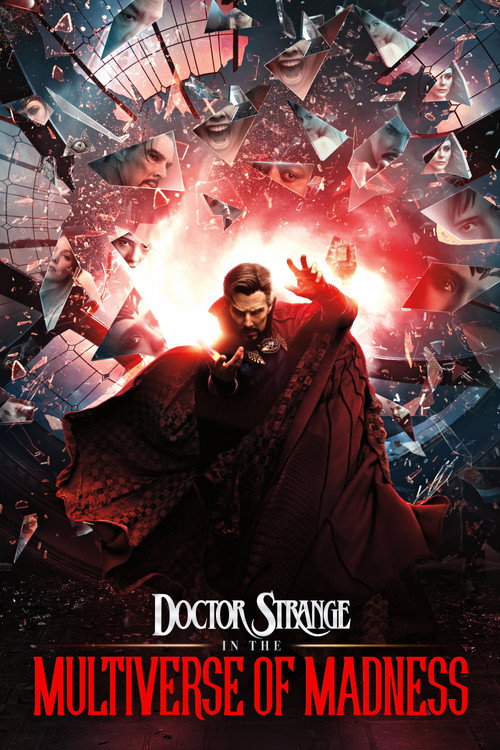
America Chavez, a teenager who can punch holes between universes and cannot control it, is being hunted. The hunter is Wanda Maximoff, corrupted by the Darkhold, trying to steal America's power so she can travel to a universe where her children exist.
Strange takes America to Earth-838, where he meets the Illuminati: Mordo, Peggy Carter as Captain Carter, Blackagar Boltagon (Black Bolt), Maria Rambeau as Captain Marvel, Reed Richards (John Krasinski), and Professor Charles Xavier — Patrick Stewart, in the animated-series wheelchair. Wanda kills all of them.
America turns the tables by giving Wanda what she wanted — a meeting with the 838 versions of her children, who are terrified of her. Confronted with that, Wanda uses her power to destroy every copy of the Darkhold across every universe, then collapses Mount Wundagore — the temple built on the Darkhold's origin site — on top of herself.
She is presumed dead.
No body is shown, and a scream is audible from the rubble, so Marvel deliberately left it ambiguous. Elizabeth Olsen is not listed for Doomsday.
Key concepts introduced: incursions — when two universes collide, one or both are destroyed. Dreamwalking — possessing a variant of yourself.
Incursions are the most likely mechanism for whatever Doom does.
The rest of Phases Four and Five, in detail
These were summarised too tersely on the first pass. Format: title, medium, what actually happens, and whether it matters now.
Moon Knight (SERIES, 2022) — Steven Grant, a London museum gift-shop worker with dissociative identity disorder, shares a body with mercenary Marc Spector, avatar of the Egyptian moon god Khonshu. They stop Arthur Harrow from releasing the goddess Ammit, who judges people for crimes they haven't committed yet. A third personality, Jake Lockley, is revealed at the end. Relevance now: none. Fully standalone and well made.
Ms. Marvel (SERIES, 2022) — Kamala Khan, sixteen, in Jersey City. A bangle belonging to her great-grandmother unlocks hard-light constructs, connected to the Noor Dimension and the Clandestines — exiled beings trying to get home at the cost of destroying Earth. The show's genuine subject is Partition; her family's history runs through it. Relevance: the mid-credits reveals Kamala carries a mutation — the first explicit on-screen use of the word in the MCU. She leads directly into The Marvels.
Thor: Love and Thunder (FILM, 2022) — Gorr the God Butcher loses his daughter in a desert while his god laughs at his prayers, finds the god-killing Necrosword, and begins murdering gods across the cosmos. Jane Foster, dying of stage IV cancer, is called by the reforged Mjolnir and becomes the Mighty Thor — but every transformation burns away the strength her chemotherapy is trying to build. She chooses to fight anyway and dies. Gorr, given a wish, asks for his daughter back; Thor raises her as Love. Thor's line in the Doomsday trailer about being given a child suggests Love matters.
She-Hulk: Attorney at Law (SERIES, 2022) — Jennifer Walters, Bruce's cousin, gets his blood in an open wound and gains his powers without the rage — which she notes is because women are already practised at managing anger. She runs a superhuman law division. Establishes that Banner has a son, Skaar, on Sakaar; that Abomination is on supervised release; and features Daredevil in the yellow suit.
The Hulk-adjacent status quo matters if Hulk is in Brand New Day.
Guardians of the Galaxy Holiday Special (SERIES/special, 2022) — Mantis and Drax kidnap Kevin Bacon as a Christmas present for Quill. Mantis is revealed to be Quill's half-sister. Short, funny, low stakes.
Black Panther: Wakanda Forever (FILM, 2022) — Written around Chadwick Boseman's death. T'Challa dies of an undisclosed illness. A vibranium detector triggers conflict between the surface world and Talokan; Namor tries to force Wakanda into alliance against everyone else; Queen Ramonda is killed. Shuri takes the heart-shaped herb, becomes Black Panther, and ends the war by refusing to kill Namor. Introduces Riri Williams, an MIT student who built a working Iron Man suit.
Ant-Man and the Wasp: Quantumania (FILM, 2023) — The Lang and Pym families are pulled into the Quantum Realm, revealed to contain an entire hidden civilisation. Kang the Conqueror is imprisoned there; Janet helped him rebuild his ship decades ago before learning what he was. They defeat him. Cassie Lang becomes a hero in her own right and is confirmed for Doomsday.
The mid-credits sets up a Council of Kangs the franchise then abandoned.
Guardians of the Galaxy Vol. 3 (FILM, 2023) — Rocket's origin: created by the High Evolutionary, who tortures and discards animals in pursuit of perfection. The team destroys him and frees his experiments. The team then disbands and reforms — Rocket becomes captain with Groot, Kraglin, Cosmo, Adam Warlock, and Phyla; Quill goes to Earth to meet his grandfather; Drax and Nebula stay on Knowhere raising rescued children; Mantis leaves to travel; Gamora returns to the Ravagers.
Secret Invasion (SERIES, 2023) — Thirty years after Fury promised the Skrulls a home, a faction under Gravik decides to take Earth instead, infiltrating governments at the highest levels. Fury, aged and diminished, stops him. Maria Hill is killed, and Rhodey is revealed to have been a Skrull for an unspecified period.
Widely considered Marvel's weakest project.
The Marvels (FILM, 2023) — Carol Danvers, Kamala Khan, and Monica Rambeau find their powers entangled, swapping positions whenever they use them. The villain, Dar-Benn, is a Kree seeking revenge for Danvers destroying the Supreme Intelligence and leaving her homeworld dying.
The post-credits scene, in full, because it's more important than the film. Monica is trapped on the far side of a rift she closed from the wrong side, and wakes in a white medical facility. Her mother Maria Rambeau is beside her — but a variant, wearing the red-and-white Binary costume, who has never had a daughter and doesn't know who Monica is. Her doctor walks in: Hank McCoy / Beast, played by Kelsey Grammer in his Fox-films role. He explains she crossed a tear in space-time, calls it impossible, and mentions that "Charles asked for an update."
Why it matters: this is the first time an established X-Man appears in a Marvel Studios film, in a reality where the X-Men are an active, organised institution. The scene uses John Ottman's score from X2 and Days of Future Past — a deliberate signal that this is the Fox universe. It's the moment the X-Men formally went on the board, ahead of Deadpool & Wolverine doing the structural work.
Mid-credits: Kamala recruits Kate Bishop for a new team — the Young Avengers.
Echo (SERIES, 2024) — Maya Lopez returns to Oklahoma and her Choctaw family after shooting Kingpin. She connects to ancestral power passed through her maternal line and confronts Fisk, who genuinely loved her as a daughter. Relevance: bridges Fisk from Hawkeye into Born Again.
Agatha All Along (SERIES, 2024) — Agatha, powerless after Westview, gathers a coven to walk the Witches' Road for a wish. The Road is a fabrication — her own creation, drawing power from those who die on it. The teenager travelling with her is Billy Maximoff: Wanda's son, whose consciousness landed in the body of a boy who died at the exact moment the Hex collapsed. Agatha dies and returns as a ghost bound to him.
The most-cited setup for VisionQuest and for the Young Avengers.