The Fox X-Men films, 2000–2024
This section exists because of a legal accident that became a plot point.
For decades, 20th Century Fox held the film rights to the X-Men and the Fantastic Four while Marvel Studios held everything else. Fox made thirteen X-Men films in their own continuity, entirely separate from the MCU. Disney bought Fox in 2019. Marvel then had to decide what to do with two decades of films starring actors who had aged out of the roles.
The answer: those films are not erased. They are another universe — designated Earth-10005 — and Deadpool & Wolverine formally folded it into the MCU multiverse. Which is why Patrick Stewart, Ian McKellen, Kelsey Grammer, Alan Cumming, Rebecca Romijn, and James Marsden are in Avengers: Doomsday as those exact characters, decades later.
The core films
X-Men (2000) — Mutants are people born with a genetic difference that manifests at puberty as a superhuman ability. Charles Xavier runs a school that shelters and trains them and advocates coexistence. Erik Lehnsherr / Magneto, a Holocaust survivor who controls magnetism, believes coexistence is a fantasy and prepares for war. They were friends. That relationship is the spine of the entire franchise.
X2: X-Men United (2003) — Colonel William Stryker, the man who put the adamantium on Wolverine, attacks the school and attempts to use a captive Xavier to kill every mutant alive. X-Men and Brotherhood ally. Nightcrawler (Alan Cumming) debuts. Jean Grey dies holding back a flood, and something rises from the water.
X-Men: The Last Stand (2006) — A mutant "cure" is developed. Jean returns as the Phoenix, kills Cyclops and Xavier, and is stopped by Wolverine. Beast (Kelsey Grammer) debuts as a member of the US Cabinet.
Widely disliked; later films work hard to undo it.
It isn't Jean making the choices. She survived her apparent death in X2 because the Phoenix — a dormant secondary personality of immense telekinetic power — took over to save her.
Xavier had known about the Phoenix since her childhood and built psychic barriers in her mind to suppress it, without her consent. When she returns, those barriers fail, and what's loose is an unrestrained id: it disintegrates Cyclops when he approaches, then Xavier when he tries to reimpose control.
Jean is present enough at the end to ask Wolverine to kill her, and he does. Days of Future Past subsequently overwrites all of it, restoring both.
X-Men: First Class (2011) — 1962. Young Xavier (James McAvoy) and Erik (Michael Fassbender) meet, recruit the first team, and split over the Cuban Missile Crisis. This is the emotional origin of everything.
X-Men: Days of Future Past (2014) — A dystopian future where Sentinels have exterminated mutants. Wolverine's consciousness is sent back to 1973 to prevent Mystique from assassinating the Sentinels' creator. It works, and overwrites the events of The Last Stand, restoring Jean and Cyclops.
This is the film that lets both the older and younger casts coexist, and it's the single most useful piece of X-Men homework after the original trilogy.
The best film in the franchise, and a genuine tragedy rather than a superhero movie.
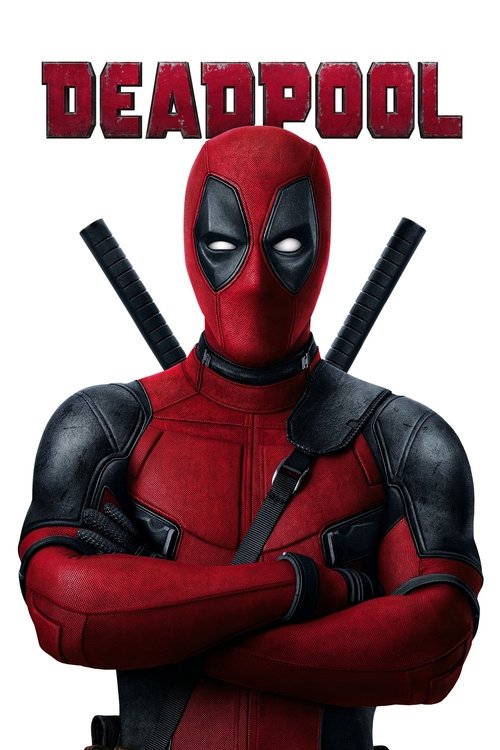
Deadpool (2016) — Wade Wilson, a mercenary with terminal cancer, undergoes a torture-based mutation programme that cures him, disfigures him, and makes him unkillable. R-rated, and the tonal outlier of the whole enterprise.
"Breaking the fourth wall" is a theatre term: a stage set has three walls, and the invisible fourth is the one between the performers and the audience. Breaking it means acknowledging you're in a fiction. Deadpool talks directly to camera, comments on his own budget, references the actors playing the roles, mocks Fox and Disney by name, and refers to earlier films as films.
Deadpool 2 (2018) — Wade forms X-Force, deals with a time-travelling soldier called Cable, and acquires a time-travel device he uses for petty personal revisions.
Deadpool & Wolverine (2024) — The bridge film, and the reason this section matters.
The TVA determines that the Fox universe (Earth-10005) is dying because its anchor being — Logan — died in Logan. The universe is scheduled for erasure. The villain is Cassandra Nova, Xavier's twin sister, exiled to the Void — the junkyard reality at the end of time where the TVA dumps pruned timelines. There they find survivors of discarded franchises: Elektra, Blade, Gambit, X-23, and the Human Torch from the 2000s Fantastic Four films.
Wade searches the multiverse with a TimeRipper stolen from the TVA. It's their own multiversal transit technology, not something he invented.
The Wolverine here is not the one who died. The Logan of Logan stays dead — the film literally opens by digging up his grave and using his skeleton as a weapon. The Wolverine Wade recruits is a variant from another universe: one who arrived too late and let his own X-Men be slaughtered, and has been drinking about it since. Wade specifically goes looking for a Wolverine who's already broken.
The TVA bureaucrat Paradox was using the TimeRipper to accelerate Earth-10005's destruction so he could get a promotion and build his own timeline. Wade and Logan destroy the device by grabbing its two opposing poles — matter and antimatter — absorbing enough voltage to kill anything, and surviving only because one regenerates and the other can't die.
But the actual save is quieter than the explosion. Hunter B-15 arrives afterwards to report that Earth-10005 has stopped decaying — the new Wolverine has taken over as its anchor being, replacing the one who died in Logan. Paradox had insisted an anchor being couldn't be replaced by a variant. He was wrong, and nobody at the TVA understands why it worked.
Do Deadpool and Wolverine "switch universes"?
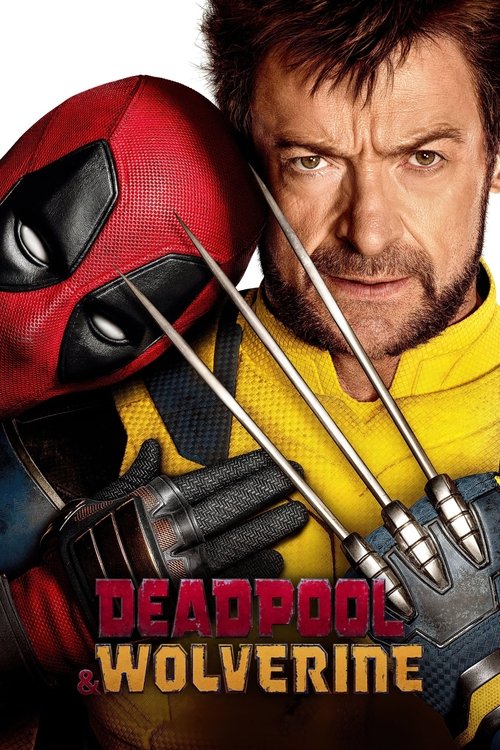
Half true, and worth being precise about, because the two halves point in opposite directions.
Wolverine: yes, permanently. He is a variant recruited from an entirely different reality, and at the end of the film he stays on Earth-10005 — Wade's world — rather than going home. His own universe is written off as a lost cause, and he becomes the new anchor being of this one. Laura / X-23 stays too; the final scene has both of them in Wade's living room with Blind Al and Vanessa.
Deadpool: no — and refusing is the entire plot. Paradox's opening offer is exactly that switch: join Earth-616, the Sacred Timeline, get a shot at the Avengers, and let Earth-10005 be quietly deleted. Wade is briefly thrilled. Then he learns the price is everyone he knows, refuses, breaks Paradox's nose, steals his TemPad, and spends the rest of the film trying to save his own universe instead. He ends the film exactly where he started.
One retcon that causes confusion: this film establishes that Deadpool was always on Earth-10005, the same universe as the Fox X-Men films. The earlier Deadpool films never made that clear and contain inconsistencies with X-Men continuity. Marvel decided it was true and moved on.
The film simply didn't want to engage with it. Don't build theories on it.
They save the Fox timeline.
Also in the animated bracket
X-Men '97 — a continuation of the 1990s animated series, Season 1 in 2024, Season 2 announced for 2026.
What If...? (SERIES, animated, three seasons) — alternate branches of known events.
Season 1 Episode 4 — "Strange Supreme," Doctor Strange's descent into darkness after Christine's death, ending with him destroying his own universe — is the only genuinely load-bearing one, and Multiverse of Madness references it directly.
Worth watching for enjoyment rather than homework: S1E1 (Peggy Carter as Captain Carter, who appears in Multiverse of Madness), S1E3 (a murder mystery among the Avengers), and S1E5 (zombies, which became the Marvel Zombies series).